Anxiety Counselling in Fort McMurray
Understand your anxiety, develop practical coping strategies, and find support for life’s challenges.
“Everyone needs someone to talk to, let’s connect and start that conversation.”
did you know?

Psychotherapy Services in Fort McMurray
Anxiety Counselling That Meets You Where You Are
Anxiety can affect how you think, feel, and move through everyday life. You might find yourself worrying about things you cannot control, feeling overwhelmed by responsibilities, or struggling to switch off your thoughts at the end of the day.
At Tips for Therapy, we offer anxiety counselling in Fort McMurray to help individuals explore these experiences, better understand their concerns, and develop practical ways to navigate life’s challenges.
Whether anxiety is affecting your work, relationships, confidence, or sense of well-being, counselling offers an opportunity to talk through what is happening and identify goals that matter to you.
You do not need to have all the answers before you begin. The first step is simply starting the conversation

When Anxiety Starts Affecting Everyday Life
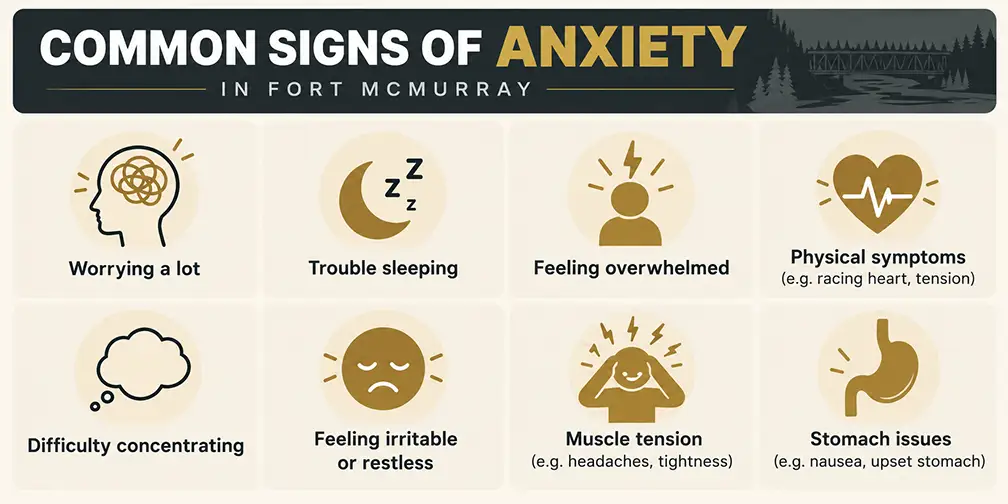
Anxiety does not look the same for everyone. Sometimes it shows up as constant worry. Other times, it can feel like tension, irritability, avoidance, or difficulty making decisions.
You may find counselling helpful if you are experiencing:
-
Work-related stress: Feeling overwhelmed by expectations, responsibilities, or uncertainty about the future.
-
Overthinking and persistent worry: Replaying conversations, anticipating worst-case scenarios, or struggling to quiet your mind.
-
Relationship challenges: Finding it difficult to communicate your feelings, manage conflict, or feel present with the people you care about.
-
Changes in confidence or routine: Avoiding activities, struggling to relax, or feeling less comfortable in situations that once felt manageable.
These experiences do not mean you have failed to cope. They may be signs that you could benefit from additional support.

How Anxiety Counselling Can Help
Anxiety counselling gives you space to explore what you are experiencing and work toward changes that fit your needs. Depending on your concerns and goals, counselling may help you:
-
Recognize patterns: Identify situations, thoughts, and responses associated with anxiety.
-
Build coping skills: Explore practical strategies for navigating stressful situations and overwhelming thoughts.
-
Strengthen emotional awareness: Better understand your feelings and how you respond to challenges.
-
Move toward meaningful goals: Work on everyday situations you would like to approach with greater confidence.
Your counselling plan should reflect your individual circumstances. Progress takes time, and outcomes vary from person to person.

What to Expect from Anxiety Counselling
Starting counselling can feel unfamiliar, especially if you are unsure what to talk about. You do not need to prepare everything in advance.
1. Start with a conversation
Share what has been happening, what concerns you most, and what you hope to get out of counselling. You can start with whatever feels comfortable.
2. Explore your concerns and goals
Work collaboratively with your counsellor to understand your experiences and identify the areas you would like to focus on.
3. Develop strategies that work for you
Explore practical approaches for navigating challenges in your everyday life. Your goals and the focus of future sessions can change as your needs evolve.
Counselling is a collaborative process. You can ask questions, share feedback, and work with your counsellor to determine the approach that best suits your circumstances.
Results & next steps
With consistent support, you can expect to feel more grounded, resilient, and in control of your thoughts and emotions. Many clients experience lasting relief from anxiety symptoms, improved relationships, and a renewed ability to enjoy life with confidence.
Staying on track after your sessions involves consistently applying the tools and strategies you’ve learned. This may include practicing breathing and grounding techniques, maintaining a structured daily routine, and reflecting on your thoughts and triggers through journaling or self-check-ins. Setting small, realistic goals can help you build momentum, while prioritizing sleep, movement, and overall well-being supports long-term progress. Over time, these habits reinforce a greater sense of stability, control, and confidence in managing anxiety.
Continuing your counselling sessions provides ongoing support, accountability, and space for growth. Regular appointments allow you to refine your strategies, work through new challenges, and deepen your self-awareness as progress unfolds. As you build confidence, sessions can evolve to focus on long-term goals and maintaining positive changes. Many clients eventually transition to less frequent, maintenance-based sessions, ensuring they remain supported while continuing to move forward with clarity and resilience.
Direct Billing to
major healthcare
Providers