Grief & Trauma Counselling in Fort McMurray
Find support to process loss, navigate difficult experiences, and move forward at your own pace.
did you know?

Psychotherapy Services in Fort McMurray
Support Through Grief and Trauma
Grief and trauma can affect how you think, feel, and navigate everyday life. You may experience sadness, anger, uncertainty, or difficulty adjusting after a loss or distressing experience.
At Tips for Therapy, we offer grief and trauma counselling in Fort McMurray to help individuals explore their experiences, understand their emotions, and develop practical ways to cope.
Everyone’s experience is different. Counselling provides a supportive space to work through difficult feelings at a pace that feels comfortable for you.

Grief and trauma can affect people in different ways. You may find it difficult to process what happened, adjust to changes, or feel like yourself again.
You may find counselling helpful if you are experiencing:
-
Grief and loss: Coping with the death of a loved one or another significant loss.
-
Difficult memories: Struggling with memories of a distressing or traumatic experience.
-
Emotional overwhelm: Experiencing sadness, anger, fear, guilt, or uncertainty.
-
Changes in daily life: Finding it difficult to maintain routines, relationships, or usual activities.
These experiences are personal, and there is no single timeline for healing. Seeking support can help you explore what you are going through.

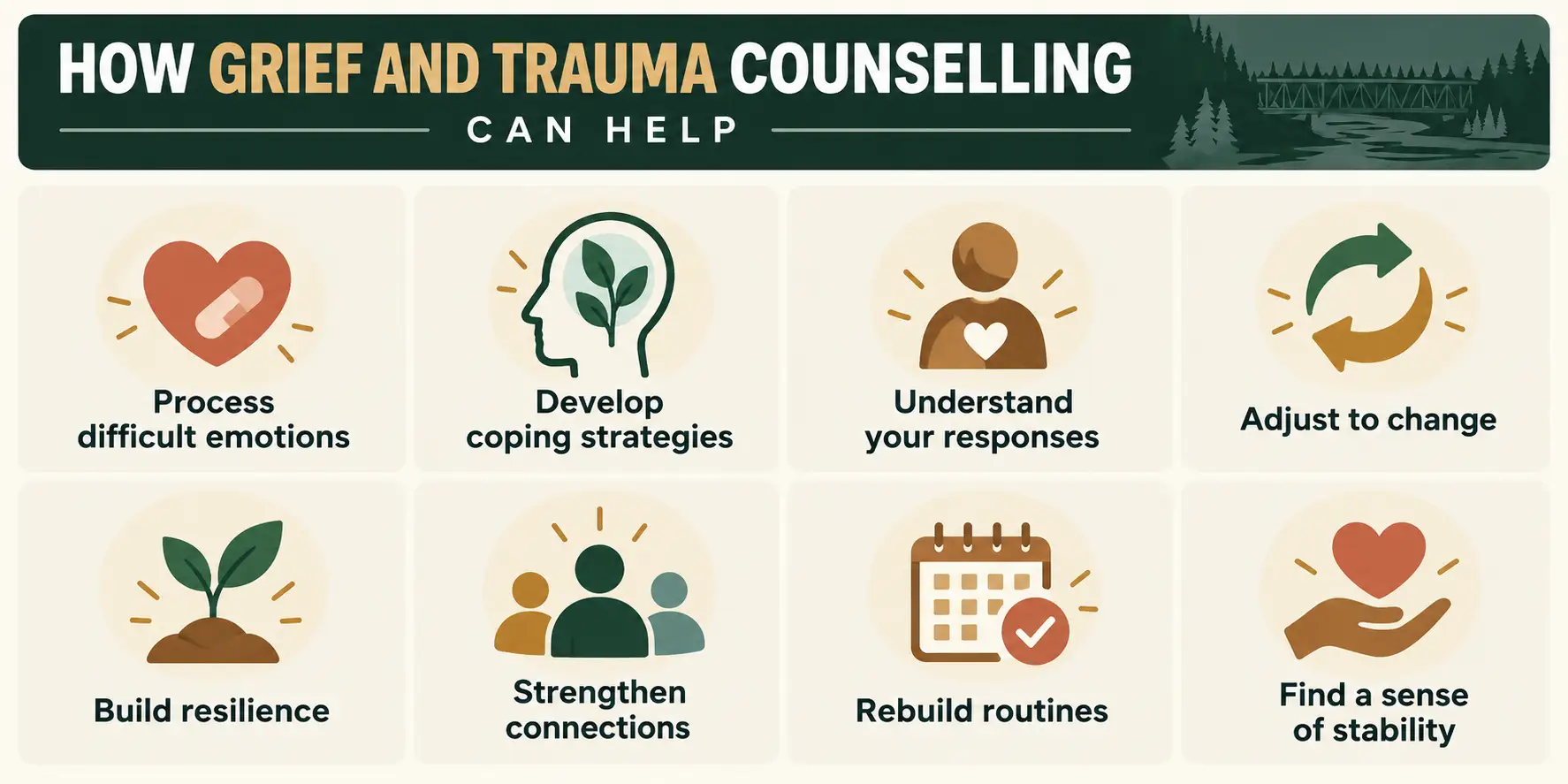
How Grief and Trauma Counselling Can Help
Counselling gives you space to explore your experiences and identify approaches that fit your needs. Depending on your circumstances and goals, counselling may help you:
-
Process difficult emotions: Explore feelings connected to loss or distressing experiences.
-
Develop coping strategies: Find practical ways to navigate challenging moments.
-
Understand your responses: Recognize emotional patterns and reactions to difficult experiences.
-
Adjust to change: Explore ways to rebuild routines, connections, and a sense of stability.
Your counselling plan should reflect your individual circumstances. Progress looks different for everyone, and there is no need to rush the process.

Starting counselling can feel unfamiliar, especially when you are dealing with difficult experiences. You do not need to know exactly what to say before your first session.
1. Start with a conversation
Share what has been happening and what kind of support you are looking for. You can begin with whatever feels comfortable.
2. Explore your experiences and goals
Work with your counsellor to identify the concerns you would like to address and the pace that feels right for you.
3. Develop approaches that support you
Explore practical strategies for navigating emotions and everyday challenges as you work toward your goals.
Counselling is a collaborative process. You can ask questions, share feedback, and discuss what feels helpful throughout your sessions.
Results & next steps
Staying on track involves giving yourself permission to heal at your own pace while using the tools learned in counselling. This may include practicing grounding techniques, allowing space for emotions without judgment, and maintaining supportive routines. Journaling, connecting with trusted individuals, and prioritizing rest and self-care can also help you process experiences in a healthy way. Over time, these practices support emotional stability and help you move forward with greater strength and understanding.
Continuing your sessions ensures you have ongoing support as you navigate the healing process. Regular check-ins provide a space to process new emotions, revisit difficult moments, and strengthen coping strategies as needed. As progress is made, sessions can shift toward rebuilding confidence, reconnecting with life, and maintaining emotional balance. Many clients eventually move into maintenance sessions, allowing them to stay supported while continuing their journey toward healing and growth.
Direct Billing to
major healthcare
Providers